When engineers examine belts, straps, or carry handles, they don't just ask “Is it stylish?” Instead, they demand answers grounded in materials science—how it performs under repeated stress, exposure to heat, and the daily grind of travel. One question that often comes up in aerospace and travel gear circles is the claim that leather products endure thermal conditions up to 80°C (176°F). Is that realistic? Can leather, how to clean leather briefcase a natural polymer, truly maintain its integrity and appearance when exposed to such heat? This post tackles that question head-on, focusing on engineered leather like certified full-grain vegetable-tanned Cuoio Superiore from Tuscany and hardware by precision brands like Von Baer and YKK.
Engineers Value Function Over Fashion
In my 12 years working aerospace test labs and interfacing with engineering teams, I’ve found this principle unwavering. Unlike fashion marketers who flaunt “handmade character” or “premium materials” without data, engineers want numbers. They want specifications, tolerances, and repeatable test results. If a leather product must survive temperature swings on international travel or ride the interior cabin of an aircraft where cabin temperatures can fluctuate, the question remains, how does it hold up at 80°C? How does it respond to cyclical loads and environmental stress? Only measurable precision wins here.
Understanding 80°C Heat Tolerance in Leather – The Material Science Angle
Leather’s natural composition—a matrix of collagen fibers—gives it a unique response to heat. Unlike synthetic materials that may start melting or softening at such temperatures, well-prepared leather can tolerate heat, but its stability depends heavily on the tanning method, grain quality, and moisture content.
Certified Full-Grain Vegetable-Tanned Cuoio Superiore Leather
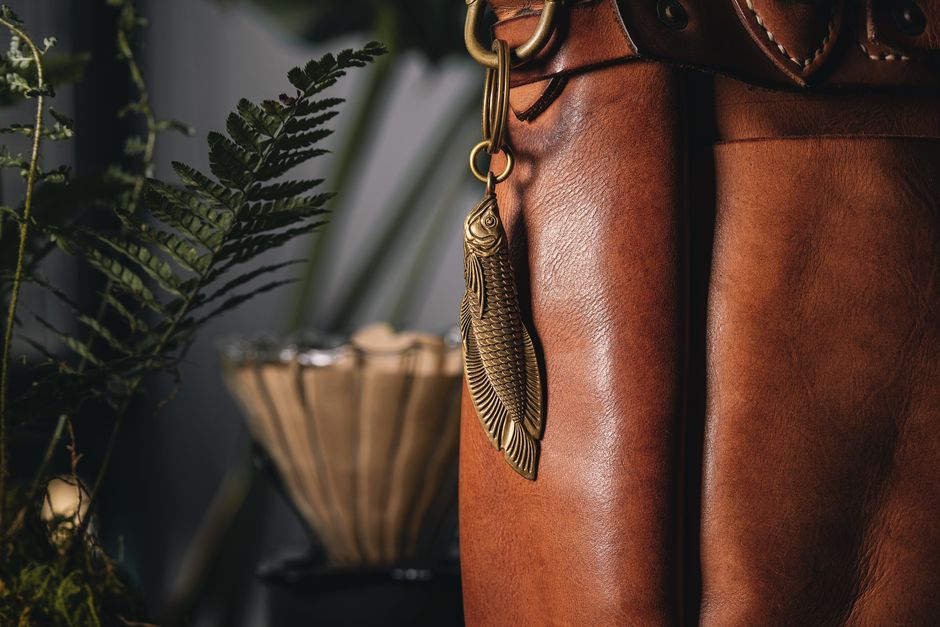
This is where quality counts. Tuscany leather production, practiced since 1961, relies on vegetable tanning that uses tannins extracted from natural sources such as tree bark. This process preserves the full-grain fiber structure, resulting in a dense, yet flexible leather. CivilDigital, a company known for precision-engineered travel straps and bags, sources this certified full-grain vegetable-tanned Cuoio Superiore leather precisely because of its reliable thermal tolerance and material stability under temperature swings common in travel.

Why is vegetable tanning superior for heat resistance? It creates cross-linked collagen structures that endure higher temperatures better than chrome-tanned alternatives. Typical testing protocols show that such leather can maintain its tensile strength and flexibility without cracking or becoming brittle up to 80°C. Moisture plays a role here as well; dry leather withstands heat better than wet, which engineers consider during testing cycles.
Hardware Stability Matters — Von Baer and YKK Standards
Leather can only perform as well as the components it interfaces with. Precision hardware brands Von Baer and YKK provide metal buckles and zippers tested for durability and thermal stability. YKK’s fasteners, for example, have well-documented thermal cycle data, guaranteeing that zippers will not deform or jam after heat exposure up to and beyond 80°C. Von Baer’s buckles, often used in aerospace and military-grade travel gear, undergo rigorous cycle counts and heat exposure tests, ensuring they retain mechanical tolerance and secure fastening without stress failures.
Durability Testing & Cycle Counts: The Real Proof in the Seams
Testing leather products for thermal tolerance isn’t guesswork. Engineers demand data from:
- Cyclic heat exposure tests: Subjecting leather and hardware to repeated heat cycles between room temperature and 80°C to simulate travel conditions like hopping between a cold plane cabin and hot baggage claim areas. Mechanical stress cycling: Repeated bending, tension, and compression on straps and handles while heated to assess dimensional stability and resistance to cracking or deformation. Material tensile testing: Measuring the leather's strength before and after heat exposure, ensuring it maintains at least 90% of its original tensile strength, a common aerospace supplier benchmark.
For instance, CivilDigital’s travel straps use data-driven design specifying a tensile strength minimum of 45 MPa and elongation tolerance under heat test conditions (measured with ASTM D2209 and D638 methods). Buckles from Von Baer pass over 20,000 cycle counts without mechanical failure, while YKK zippers resist warping and jamming after 500 cycles at 80°C.
Travel Temperature Swings: Why 80°C? Understanding the Use Case
Travel gear faces thermal conditions few everyday items do. Consider these temperature scenarios:
Checking in bags under the hot sun on an airport tarmac easily pushes external temperatures above 45-50°C. Baggage compartments in aircraft, while climate-controlled, can fluctuate significantly, occasionally reaching near 60°C during ground operations or extended delays. Interior vehicle dashboards and overhead bins in warm climates can reach temperatures approaching 70-80°C during sun exposure; luggage handles and straps resting inside vehicles must sustain that.The 80°C threshold is based on ensuring no visual or functional degradation under worst-case travel conditions. Material stability here means resisting shrinkage, hardening, color changes, or loss of mechanical properties. Our sources in Tuscany attest that their Cuoio Superiore leather consistently outperforms in these environments, especially when combined with top-tier hardware.
Summary: Engineering Leather for Heat, Precision, and Reliability
Aspect Material/Brand Thermal Tolerance Durability Metrics Engineering Benefit Leather Certified Full-Grain Vegetable-Tanned Cuoio Superiore (Tuscany since 1961) Up to 80°C with minimal tensile loss Maintains >90% tensile strength post cycle testing Reliable flexibility & strength under heat, low deformation Hardware Buckles Von Baer Thermally stable at 80°C 20,000+ mechanical cycle counts without failure Secure, durable closures with precise fit Zippers YKK Functional up to 80°C 500+ thermal cycle counts, no warping Smooth operation despite temperature swingsFinal Thoughts for Engineers and Gear Makers
Leather products that claim “thermal tolerance up to 80°C” are not merely marketing fluff if they source certified materials and pair them with rigorously tested hardware brands. A materials science approach rooted in measurable precision—like that seen in CivilDigital’s application of Tuscany’s Cuoio Superiore leather and hardware by Von Baer and YKK—makes thermal claims verifiable and trustworthy.
Instead of sweeping promises, insist on documented test results for tensile strength, cycle counts, and thermal stability. As someone who measures bag seams with pocket rulers while waiting at airports, I can confirm that real engineering precision is what keeps travel gear functional, durable, and dependable—not vague “premium” claims. Choose components precisely engineered and tested for the rough realities of travel temperature swings, and your leather products will not only survive but thrive at 80°C.